
Meet Judelyn Padgett, a project manager at AUI headquarters.
Recent News
NA-ROAD Announces the 2026 Women and Girls in Astronomy Program Cohort
The Women and Girls in Astronomy Program (WGAP), led by Associated Universities, Inc. (AUI), under the North American Regional Office of Astronomy for Development (NA-ROAD), is proud to announce the selection of ten regional projects to receive funding through the 2026 cycle.
Twisted Physics: Astronomers Solve 30-Year-Old Stellar Mystery
Astronomers using the Atacama Large Millimeter/submillimeter Array (ALMA) have captured the first direct, high-resolution images of a magnetic field wrapped tightly around the outflow of gas streaming away from a forming star — evidence that solves a decades-old puzzle about how young stars sculpt the powerful jets that form them.
Woodstar Labs Welcomes New Wave of Cyber Analysts
Woodstar Labs, a subsidiary of AUI focused on cutting-edge-cybersecurity solutions, microelectronics, eLearning, and STEM education welcomes a new cohort of Cyber Analysts. Woodstar labs is excited to work with this talented group of young professionals as we continue to expand our capabilities and initiatives.
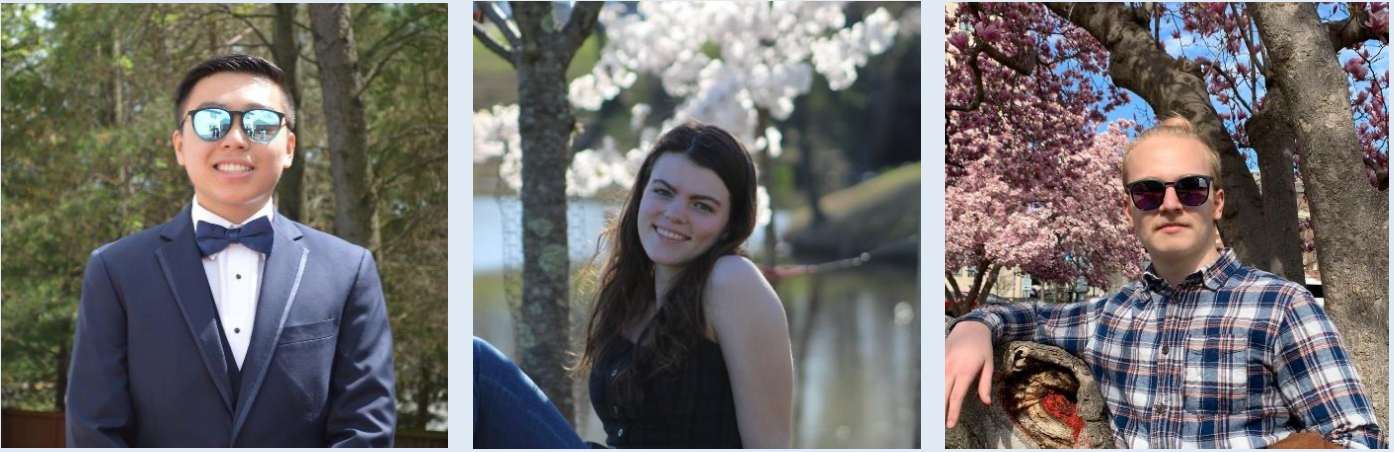
Brendon Shao
Brendon is our newest team member who joined Woodstar Labs in late April 2020. He has been contributing to the creation of internal processes and website development. He will also be working with the team to advance CMMC requirements and controls. He anticipates graduating from George Mason University with a B.S. in Cyber Security Engineering and a minor in Data Analysis in Spring 2022.
Melody Jackson
Melody joined Woodstar Labs in March 2020 where her primary focus has been on Elasticsearch and Microsoft Power Automate. She has been instrumental in creating workflows and automating processes in the company. She anticipates graduating from George Mason University with a B.S. in Cyber Security Engineering in Spring 2022.
Ian Russell
Ian joined Woodstar Labs in early January 2020. He has focused on external network data collection and Python-based automation solutions. He has significantly contributed to Woodstar Labs data collection and aggregation processes. He anticipates graduating from George Mason University with a B.S. in Cyber Security Engineering in Spring 2022.


Recent News
10 Questions: Judelyn Padgett
Meet Judelyn Padgett, a project manager at AUI headquarters.
NA-ROAD Announces the 2026 Women and Girls in Astronomy Program Cohort
The Women and Girls in Astronomy Program (WGAP), led by Associated Universities, Inc. (AUI), under the North American Regional Office of Astronomy for Development (NA-ROAD), is proud to announce the selection of ten regional projects to receive funding through the 2026 cycle.
Twisted Physics: Astronomers Solve 30-Year-Old Stellar Mystery
Astronomers using the Atacama Large Millimeter/submillimeter Array (ALMA) have captured the first direct, high-resolution images of a magnetic field wrapped tightly around the outflow of gas streaming away from a forming star — evidence that solves a decades-old puzzle about how young stars sculpt the powerful jets that form them.