
These joint efforts support the pathfinder for ngVLA technologies, focusing on very long baseline interferometry (VLBI) capabilities that enable ultra-sharp imaging of the Universe.
Recent News
Astronomers Detect Magnetic Fingerprint of a Cosmic Explosion for the First Time
Using the U.S. National Science Foundation Very Large Array (NSF VLA) radio telescope, which is operated by the U. S. National Science Foundation National Radio Astronomy Observatory (NSF NRAO), the team detected polarized light from a gamma-ray burst (GRB) afterglow for the first time at radio wavelengths.
NSF VLA Sky Survey Sets New Standard for High-Resolution, Wide-Area Radio Astronomy
The U.S. National Science Foundation National Radio Astronomy Observatory (NSF NRAO) has completed observations for the Very Large Array Sky Survey (VLASS), the most detailed radio survey of the sky ever conducted.
Pride Month Statement
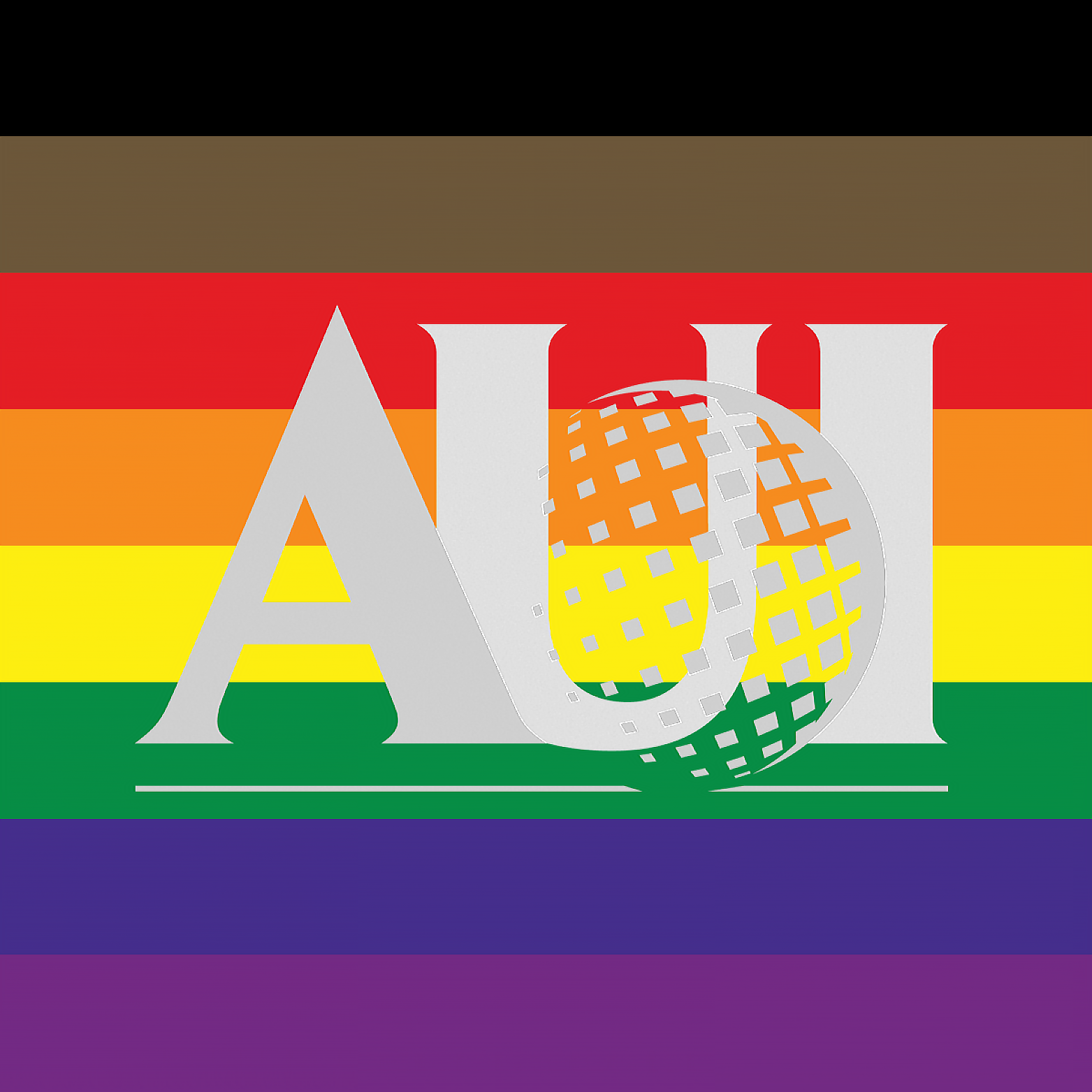
Pride Month is a time for celebration of LGBTQIA+ communities and commemoration of the Stonewall Uprising of 1969 and the ensuing liberation movement it inspired for the ongoing fight for full equality.
At AUI, we celebrate an environment that is safe and welcoming to all, and the strength that our diversity brings us. We also reflect on our policies, outreach, and behavior to ensure a meaningful and lasting embrace of diversity and inclusion every day—beyond the month of June. At AUI, we remain committed to a diverse and inclusive workplace culture that welcomes and appreciates all individuals regardless of race, gender, gender identity/expression, age, ethnicity, ability, sexual orientation, socioeconomic status, religious affiliation, or national origin and culture.
Innovation and problem solving skills are paramount to science and technology and we ensure a diversity of perspectives and attract and retain top talent through a culture of inclusivity. This month we celebrate the LGBTQIA+ communities and how they help make AUI better as an organization.


Recent News
U.S. National Science Foundation, NSF National Radio Astronomy Observatory and U.S. Naval Observatory Partner on Pathfinder for Next Generation Very Large Array
These joint efforts support the pathfinder for ngVLA technologies, focusing on very long baseline interferometry (VLBI) capabilities that enable ultra-sharp imaging of the Universe.
Astronomers Detect Magnetic Fingerprint of a Cosmic Explosion for the First Time
Using the U.S. National Science Foundation Very Large Array (NSF VLA) radio telescope, which is operated by the U. S. National Science Foundation National Radio Astronomy Observatory (NSF NRAO), the team detected polarized light from a gamma-ray burst (GRB) afterglow for the first time at radio wavelengths.
NSF VLA Sky Survey Sets New Standard for High-Resolution, Wide-Area Radio Astronomy
The U.S. National Science Foundation National Radio Astronomy Observatory (NSF NRAO) has completed observations for the Very Large Array Sky Survey (VLASS), the most detailed radio survey of the sky ever conducted.