
Meet Judelyn Padgett, a project manager at AUI headquarters.
Recent News
NA-ROAD Announces the 2026 Women and Girls in Astronomy Program Cohort
The Women and Girls in Astronomy Program (WGAP), led by Associated Universities, Inc. (AUI), under the North American Regional Office of Astronomy for Development (NA-ROAD), is proud to announce the selection of ten regional projects to receive funding through the 2026 cycle.
Twisted Physics: Astronomers Solve 30-Year-Old Stellar Mystery
Astronomers using the Atacama Large Millimeter/submillimeter Array (ALMA) have captured the first direct, high-resolution images of a magnetic field wrapped tightly around the outflow of gas streaming away from a forming star — evidence that solves a decades-old puzzle about how young stars sculpt the powerful jets that form them.
NSF NRAO Announces 2026 Jansky Fellows
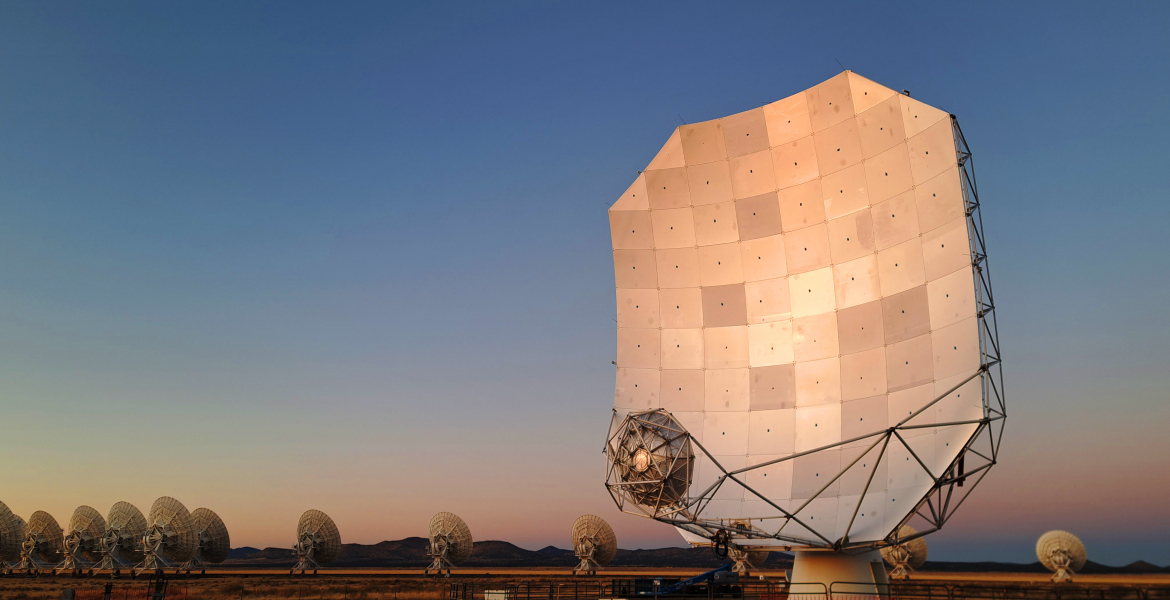
Image credit: NRAO/AUI/NSF
The NRAO Jansky Fellowship Program is designed to support outstanding early-career scientists and engineers in conducting independent research related to the mission of the U.S. National Science Foundation National Radio Astronomy Observatory (NSF NRAO). This program aims to foster innovation and leadership in the field of radio astronomy by providing opportunities for fellows to engage in cutting-edge research, collaborate with NSF NRAO staff, and contribute to the development of world-class radio telescope facilities. Fellowships are initially awarded for two years.
Fellows are able to work on self-directed research projects, with opportunities to collaborate with NRAO staff, U.S. universities, and international colleagues. The program encourages projects in radio astronomy techniques, instrumentation, computation, theory, and multi-wavelength studies that align with the NSF NRAO’s mission and facilities. Appointments are made at NSF NRAO sites in New Mexico, Virginia, and West Virginia.
The 2026 Jansky Fellows are:
Ryan Boyden
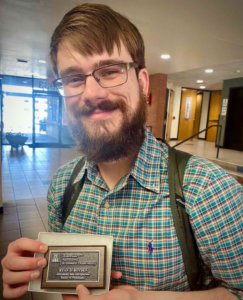 Ryan Boyden received his PhD in 2023 from the University of Arizona and subsequently moved to the University of Virginia in Charlottesville, Virginia as a Virginia Initiative on Cosmic Origins Postdoctoral Fellow. His research aims to understand the relationship between planet formation and star formation. Specifically, he uses observations from the Atacama Large Millimeter/submillimeter Array (ALMA), the NSF Karl G. Jansky Very Large Array (VLA), and the James Webb Space Telescope (JWST) to measure the properties of protoplanetary disks in clustered star-forming environments, like the Orion Nebula Cluster. As a Jansky Fellow, Ryan will lead as Principal Investigator a series of newly approved ALMA, VLA, and JWST programs to constrain the environmental influence on planet formation. He is especially excited to pioneer new applications of radio recombination lines to measure gas kinematics in protoplanetary disks, using observations from his large VLA program “PEARRLS: The Proplyd EVLA/ALMA Radio Recombination Line Survey.”
Alexander (Sasha) Plavin
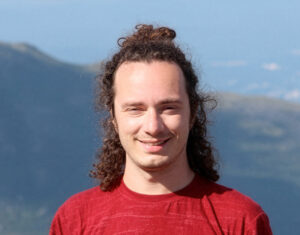 Sasha Plavin received his Ph.D. in Physics and Astronomy from Lebedev Physical Institute, Moscow in 2022. He served as a Black Hole Initiative postdoctoral fellow at Harvard University where he focused on studying quasar jets and black hole environments through multimessenger astronomy and data analysis: from radio interferometry and the Event Horizon Telescope to high-energy neutrinos. Sasha is no stranger to the NRAO community, having participated in the NRAO Summer School in 2016, and returning as a summer intern in 2019. As a Jansky Fellow, Sasha will advance his research on multimessenger astronomy and particle acceleration in active galactic nuclei and his work will combine radio VLBI observations with high-energy neutrino detections to address fundamental questions about how quasars accelerate particles to extreme energies.
Jacob Turner
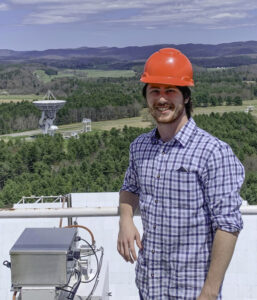 Jacob Turner received his Ph.D in physics from West Virginia University in 2023 and has been a postdoctoral fellow at Green Bank Observatory since receiving his advanced degree. He has, over the past four years, served as leader of the Pulsar Science Collaboratory (PSC) scintillation group, acting as a research mentor for thirteen students, ranging from middle school to graduate school, helping them learn how to observe, process, analyze, and interpret pulsar data. Additionally, his work at Green Bank has been primarily focused on cyclic spectroscopy and he has been instrumental in the development and testing of this unique backend system. As a Jansky fellow, Jacob will expand the field of pulsar cyclic spectroscopy through demonstrations of the technique’s capabilities using the GBT’s new cyclic spectroscopy backend, as well as commission similar systems for instruments like the DSA.
About NRAO
The National Radio Astronomy Observatory and the Green Bank Observatory are major facilities of the U.S. National Science Foundation, operated under cooperative agreement by Associated Universities, Inc.
This news article was originally published on the NRAO website on May 7, 2026.


Recent News
10 Questions: Judelyn Padgett
Meet Judelyn Padgett, a project manager at AUI headquarters.
NA-ROAD Announces the 2026 Women and Girls in Astronomy Program Cohort
The Women and Girls in Astronomy Program (WGAP), led by Associated Universities, Inc. (AUI), under the North American Regional Office of Astronomy for Development (NA-ROAD), is proud to announce the selection of ten regional projects to receive funding through the 2026 cycle.
Twisted Physics: Astronomers Solve 30-Year-Old Stellar Mystery
Astronomers using the Atacama Large Millimeter/submillimeter Array (ALMA) have captured the first direct, high-resolution images of a magnetic field wrapped tightly around the outflow of gas streaming away from a forming star — evidence that solves a decades-old puzzle about how young stars sculpt the powerful jets that form them.