
As a 2026 AAAS Fellow Pesce is recognized for his leadership in advancing astrophysical research and his commitment to fostering collaboration and innovation within the U.S. astronomical community.
Recent News
10 Questions: Brian Kent
Meet Brian Kent, director of science communications at the U.S. National Science Foundation National Radio Astronomy Observatory.
NSF Green Bank Telescope Tunes in to Artemis II
The National Science Foundation’s Green Bank Telescope (NSF GBT) will support NASA’s Artemis II mission by helping to track the crewed Orion spacecraft throughout its historic journey around the Moon.
Mission Patagonia Welcomes Its 2026 Nature Guardians
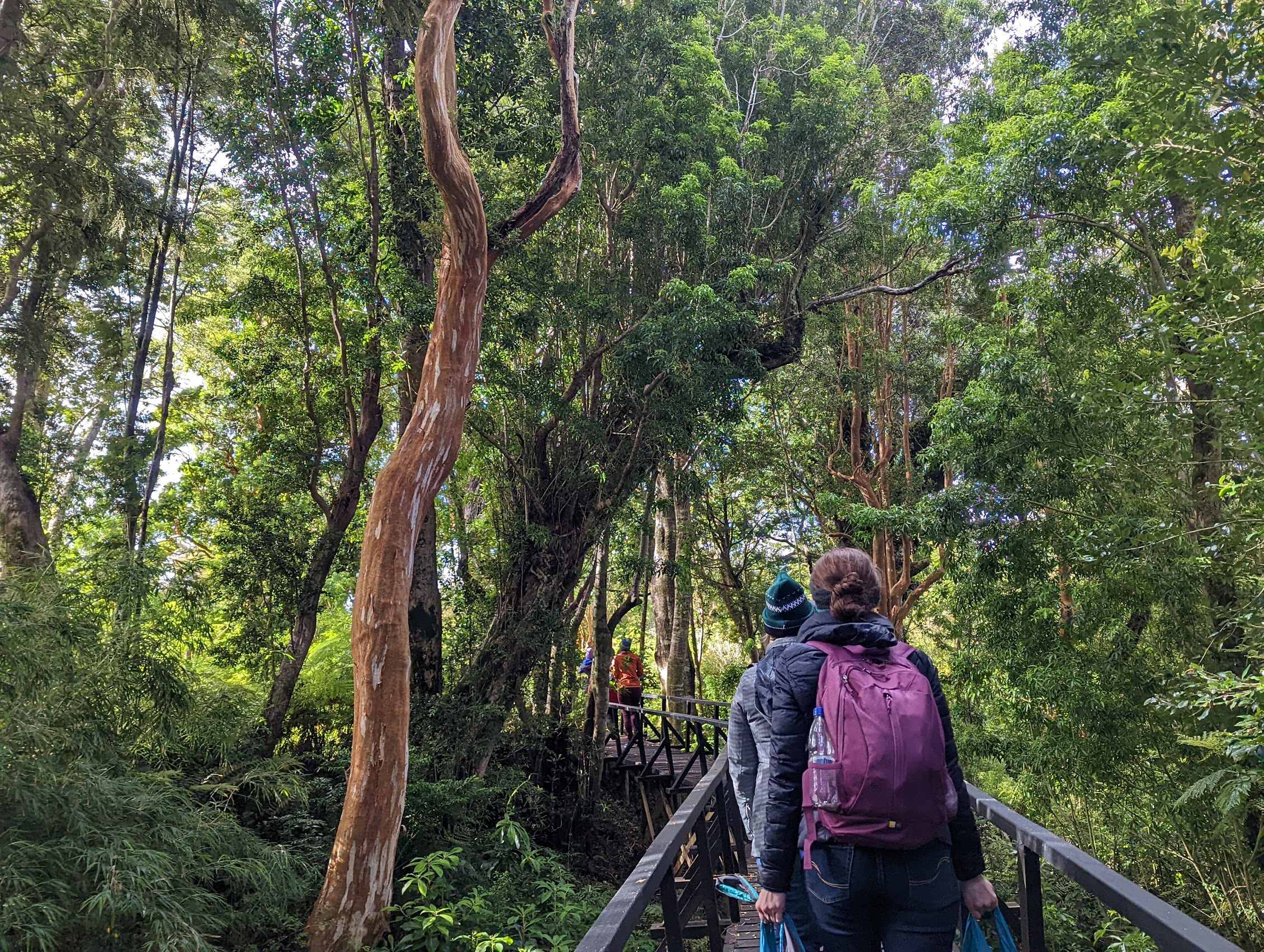
A shared journey into ecosystemic belonging in southern Chile
A small cohort of educators, scientists and environmental leaders will embark March 3-14 to the southern edge of the world for Mission Patagonia, an immersive outdoor environmental education experience designed to foster deep connection to place, people and planet. Upon returning home, participants will translate their lived experiences in Patagonia into teaching, storytelling and community engagement that inspire environmental stewardship and place-based learning in their own regions. Educators, scientists, communicators and environmental practitioners seeking a transformative, place-based learning experience are invited to apply to the December 2026 cohort by visiting the Mission Patagonia website. An informational webinar will be hosted on the site on April 9.
“This journey was more than just a trek through the forest,” said Debbie McKay, a participant in last year’s mission.”The scientists and guides taught us the unique biodiversity of the plants, mushrooms, birdlife, and aquatic life. I experienced how we are all connected and that these places and creatures depend on us to keep their world intact.”
The cohort will experience diverse landscapes across southern Chile, beginning in Castro City in the Chiloé Archipelago and continuing to the Melimoyu Elemental Reserve in the Aysén region. The reserve is a privately protected conservation area spanning more than 16,000 hectares, surrounded by volcanoes, glaciers, fjords and Patagonian evergreen forests.
The program is guided by an environmental education model developed by the REM team, drawing on internationally recognized frameworks such as the UNESCO- and UNEP-led Tbilisi Declaration, Kolb’s experiential learning cycle, the Open Standards for the Practice of Conservation, and the Integral Learning Method developed by the Caserta Foundation. Together, these approaches emphasize reflection, multidimensional learning and the role of environmental education as a tool for effective conservation.
Beyond the immersive field experiences, Mission Patagonia is a space for relationship-building. Participants are encouraged to exchange ideas, explore shared challenges and form new collaborations with others working in complementary education and outreach spaces, which extends the impact of the expedition far beyond Patagonia itself. Mission Patagonia is supported through a partnership between AUI and Filantropia Cortes Solari’s Reserva Elemental Melimoyu.
Meet the March 2026 Nature Guardians
The 2026 cohort represents a wide range of disciplines and perspectives with a shared commitment to education, conservation and public engagement:
- Amy Barraclough, director of the Edelman Planetarium, Rowan University (New Jersey)
- E.V. Bell, marine and environmental educator (South Carolina)
- Dan Hill, director of Kalmia Gardens, Coker University (South Carolina)
- Dr. Cathy Kindem, principal, Oak Ridge Elementary School of Leadership, Environmental & Health Sciences (Minnesota)
- Hamza Malik, director of research programs and strategic partnerships, Lloyd Center for the Environment (Massachusetts)
- Amy C. Oliver, public affairs officer, Smithsonian Astrophysical Observatory’s Fred Lawrence Whipple Observatory (New Mexico)
Full participant biographies are available on the Mission Patagoina website.
Applications Now Open for December 2026
Mission Patagonia is now accepting applications for its next expedition, taking place December 1–10, 2026.
- Applications are open now
- Application deadline: May 4, 2026
- Apply online
Associated Universities Inc. is an independent, non-profit corporation founded in 1946 that specializes in design, building and managing cutting-edge research facilities and the development and implementation of innovative approaches to education, outreach and workforce development. Currently, AUI manages two U.S.-funded research and development centers: The U.S. National Science Foundation National Radio Astronomy Observatory (NSF NRAO) and the NSF Green Bank Observatory (GBO). NRAO is the North American partner in the management of the Atacama Large Millimeter/submillimeter Array (ALMA) in Chile. In addition, NRAO includes the Very Large Array (VLA) and the Very Long Baseline Array (VLBA), and GBO is home to the 100-meter Robert C. Byrd Green Bank Telescope.


Recent News
New Director of North American ALMA Science Center Named Fellow of the American Association for the Advancement of Science
As a 2026 AAAS Fellow Pesce is recognized for his leadership in advancing astrophysical research and his commitment to fostering collaboration and innovation within the U.S. astronomical community.
10 Questions: Brian Kent
Meet Brian Kent, director of science communications at the U.S. National Science Foundation National Radio Astronomy Observatory.
NSF Green Bank Telescope Tunes in to Artemis II
The National Science Foundation’s Green Bank Telescope (NSF GBT) will support NASA’s Artemis II mission by helping to track the crewed Orion spacecraft throughout its historic journey around the Moon.