
To celebrate the Inspiration4 Mission’s 5th Anniversary, mission pilot Dr. Sian Proctor is choosing to celebrate in a fitting way — raising funds to send community college students and faculty to Space Camp.
Recent News
10 Questions: Judelyn Padgett
Meet Judelyn Padgett, a project manager at AUI headquarters.
NA-ROAD Announces the 2026 Women and Girls in Astronomy Program Cohort
The Women and Girls in Astronomy Program (WGAP), led by Associated Universities, Inc. (AUI), under the North American Regional Office of Astronomy for Development (NA-ROAD), is proud to announce the selection of ten regional projects to receive funding through the 2026 cycle.
AUI Launches New Podcast
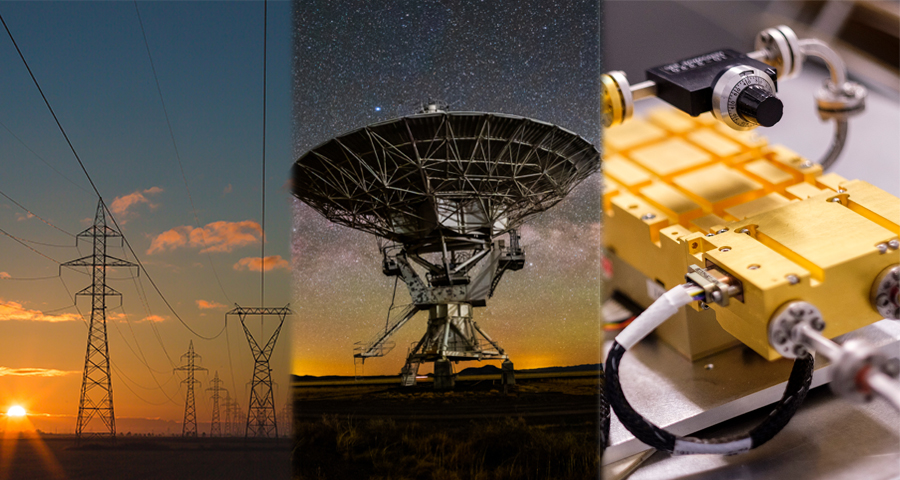
How do scientists form breakthroughs and create inventions that make our modern way of life possible?
“Beyond the Breakthrough” a new podcast from AUI, takes listeners behind the scenes of big science discoveries and developments. The first episode will launch on March 26 – National Science Appreciation Day.
In each episode, host Kelsey Underwood, AUI’s digital communications specialist, speaks with one or more industry experts to breakdown a scientific advancement and investigate who and what made it possible.
“The goal of ‘Beyond the Breakthrough’ is not only to provide the public with more insight into what goes on at large user facilities, but also to inspire new ideas in the science community and upcoming generations of scientists,” Underwood said. “From seasoned scientists to high school students, the show can be enjoyed by all who have an interest in STEM.”
In season one, listeners can expect episodes on “Using Radar for Planetary Defense”, “Combating the Challenges of Sourcing Power”, “Advancing Science with the User Facility Model” and “Engaging Communities in STEM in the Digital Age”, among others.
“Beyond the Breakthrough” episodes will release on the last Wednesday of each month. Listeners can stream episodes on PodBean, Spotify and YouTube. The trailer is now available to stream. For new episode reminders and updates on the podcast, follow AUI on Instagram, LinkedIn and Facebook.
About AUI
AUI is an independent, not-for-profit corporation founded in 1946 that builds, manages, and operates large research and development (R&D) facilities for the federal government including the U.S. National Science Foundation National Radio Astronomy Observatory, which includes the Green Bank Observatory in West Virginia and the Atacama Large Millimeter/submillimeter Array (ALMA) in Chile.


Recent News
Proctor Foundation for Art and Science Offers Stellar Guitar to Space Camp Auction
To celebrate the Inspiration4 Mission’s 5th Anniversary, mission pilot Dr. Sian Proctor is choosing to celebrate in a fitting way — raising funds to send community college students and faculty to Space Camp.
10 Questions: Judelyn Padgett
Meet Judelyn Padgett, a project manager at AUI headquarters.
NA-ROAD Announces the 2026 Women and Girls in Astronomy Program Cohort
The Women and Girls in Astronomy Program (WGAP), led by Associated Universities, Inc. (AUI), under the North American Regional Office of Astronomy for Development (NA-ROAD), is proud to announce the selection of ten regional projects to receive funding through the 2026 cycle.