News

New Discovery Challenges Evolution of Galaxy Clusters

New Discovery Challenges Evolution of Galaxy Clusters

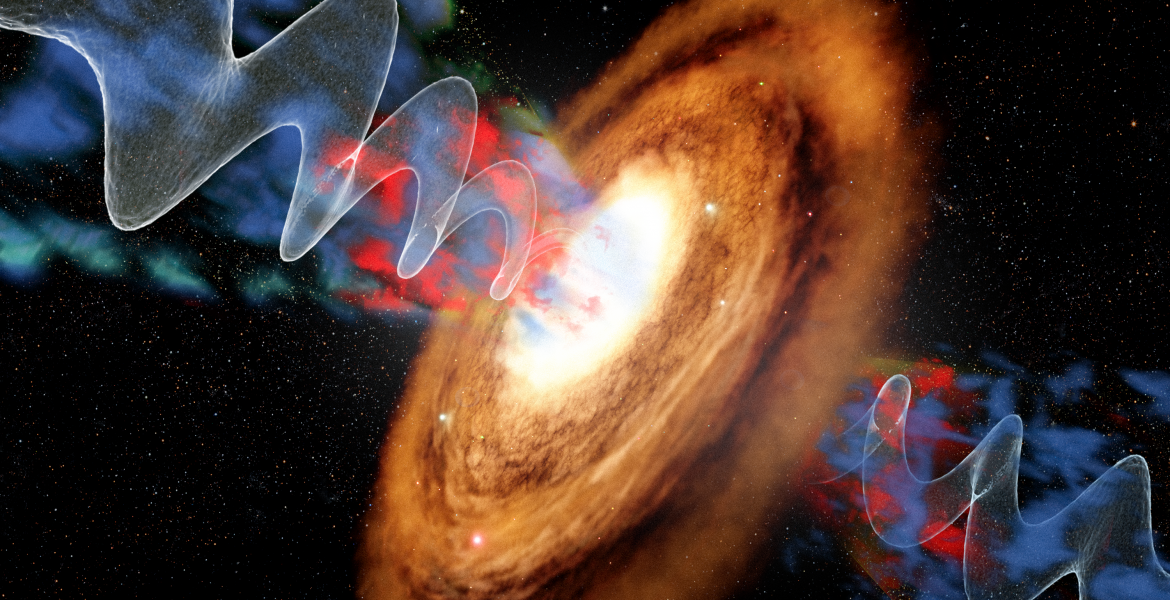
Peering back in time, around 12 billion years, astronomers using the Atacama Large Millimeter/submillimeter Array (ALMA) have found the most distant and direct evidence of scorching gas in a forming galaxy cluster, SPT2349-56. The hot plasma, seen when the Universe was just 1.4 billion years old, is far hotter and more pressurized than current theories predicted for such an early system.

Cosmic Lens Reveals Hyperactive Cradle of Future Galaxy Cluster

Cosmic Lens Reveals Hyperactive Cradle of Future Galaxy Cluster

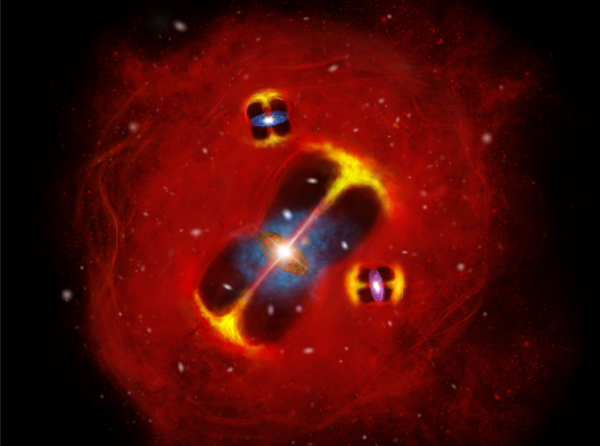
Astronomers using the U.S. National Science Foundation Very Large Array (NSF VLA) and the Atacama Large Millimeter/submillimeter Array (ALMA) have discovered a rare protocluster that was exceptionally bright, all when the Universe was 11 billion years younger. The system, called PJ0846+15 (J0846), is the first strongly lensed protocluster core discovered, revealing how some of the most massive galaxy clusters in the present-day Universe began their lives.

Stars That Die Off the Beaten Path

Stars That Die Off the Beaten Path

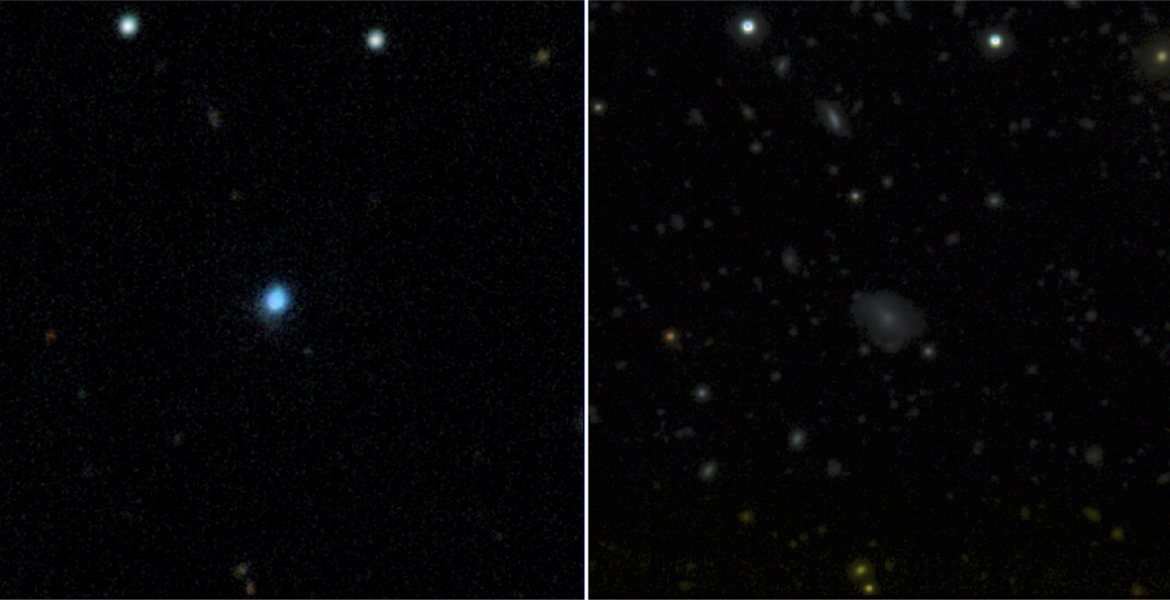
Astronomers have created a detailed forecast of where they expect to observe future stellar explosions in a nearby galaxy, opening a new window into how exploding stars shape the cosmos.

Young Galaxies Grow Up Fast

Young Galaxies Grow Up Fast

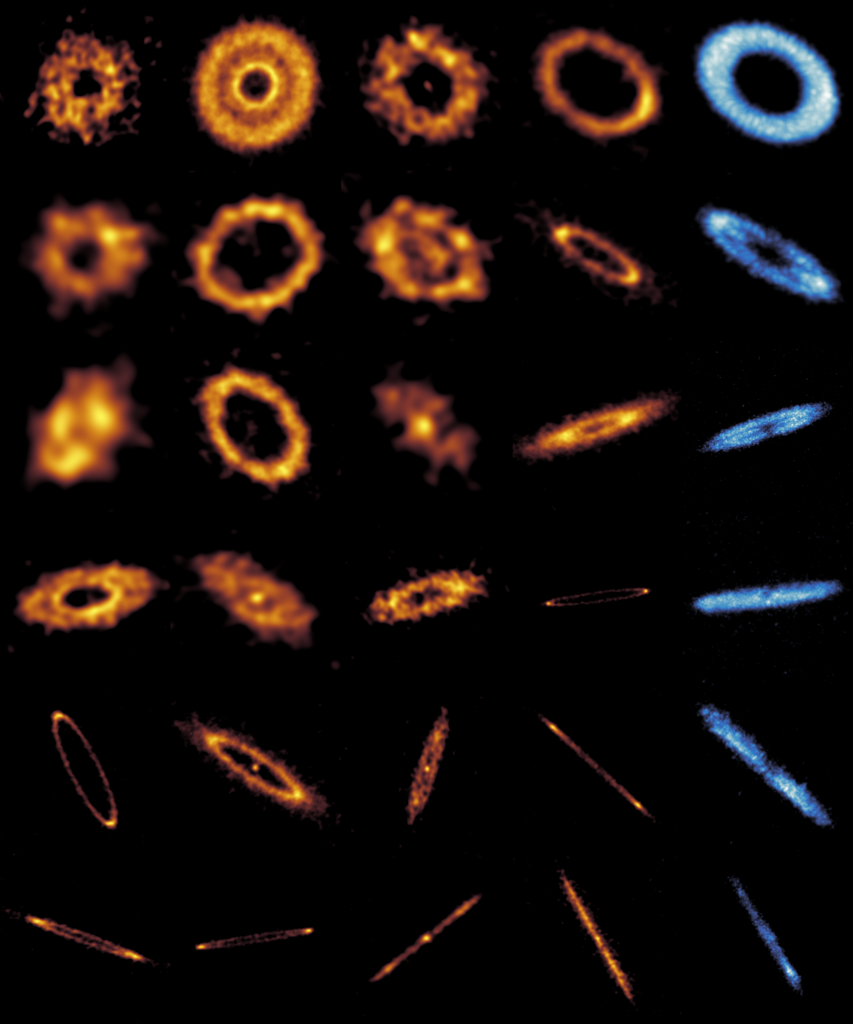
Astronomers have captured the most detailed look yet at faraway galaxies at the peak of their youth, an active time when the adolescent galaxies were fervently producing new stars. The observations focused on 18 galaxies located 12.5 billion light-years away.