News

Pair of Colliding Stars Spill Radioactive Molecules into Space

Pair of Colliding Stars Spill Radioactive Molecules into Space

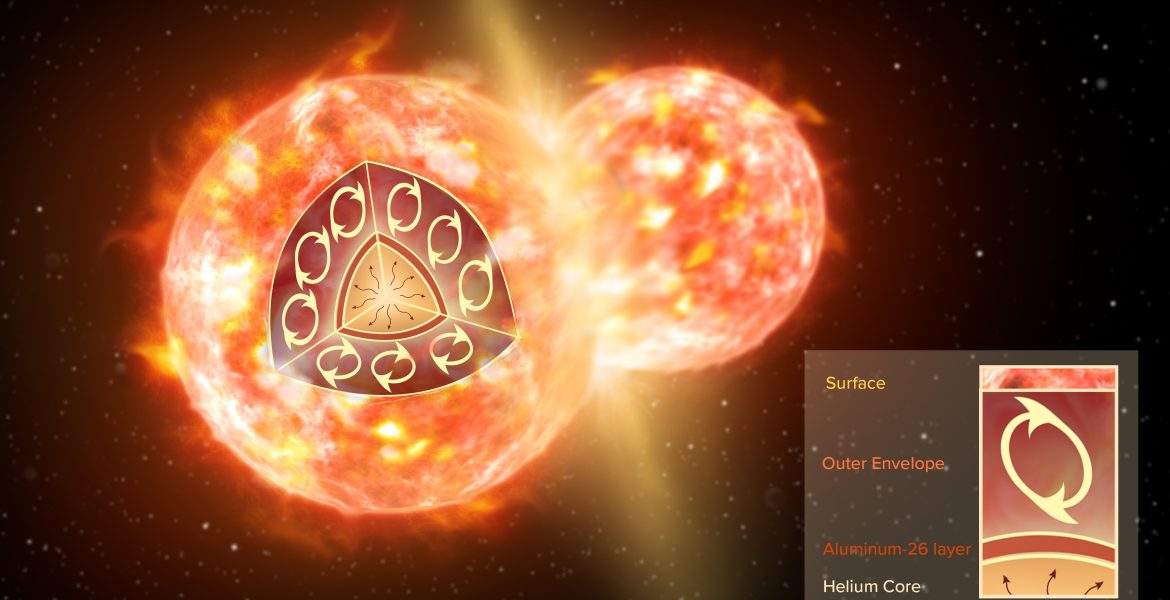
Summary: Astronomers have made the first definitive detection of a radioactive molecule in interstellar space: a form, or isotopologue of aluminum monofluoride (26AlF). The new data – made with ALMA and the NOEMA radio telescopes – reveal that this radioactive isotopologue was ejected into space by the collision of two stars, a tremendously rare...
NRAO/ALMA News Release Enduring ‘Radio Rebound’ Powered by Jets from Gamma-Ray Burst

NRAO/ALMA News Release Enduring ‘Radio Rebound’ Powered by Jets from Gamma-Ray Burst

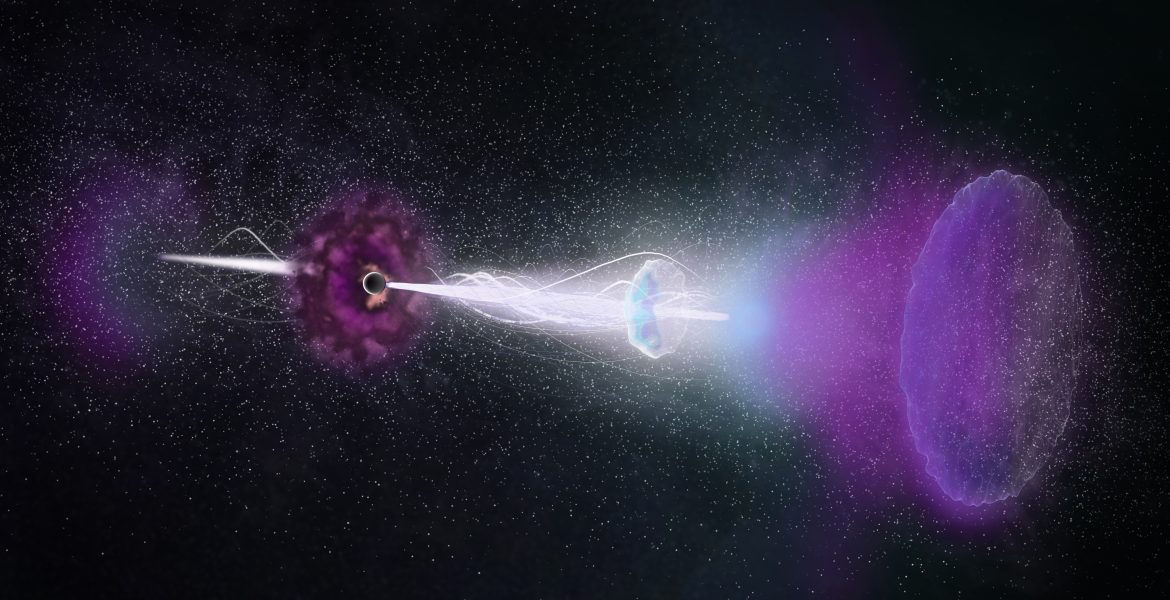
ALMA Creates Its First-ever Movie of Cosmic Explosion Summary: Astronomers using ALMA studied a cataclysmic stellar explosion known as a gamma-ray burst, or GRB, and found its enduring “afterglow.” The rebound, or reverse shock, triggered by the GRB’s powerful jets slamming into surrounding debris, lasted thousands of times longer than expected....

VLA Gives Tantalizing Clues About Source of Energetic Cosmic Neutrino

VLA Gives Tantalizing Clues About Source of Energetic Cosmic Neutrino

Astronomers pinpoint likely source of high-energy cosmic rays for first time A single, ghostly subatomic particle that traveled some 4 billion light-years before reaching Earth has helped astronomers pinpoint a likely source of high-energy cosmic rays for the first time. Subsequent observations with the National Science Foundation’s (NSF) Karl G....

Distant Quasar Providing Clues to Early-Universe Conditions

Distant Quasar Providing Clues to Early-Universe Conditions

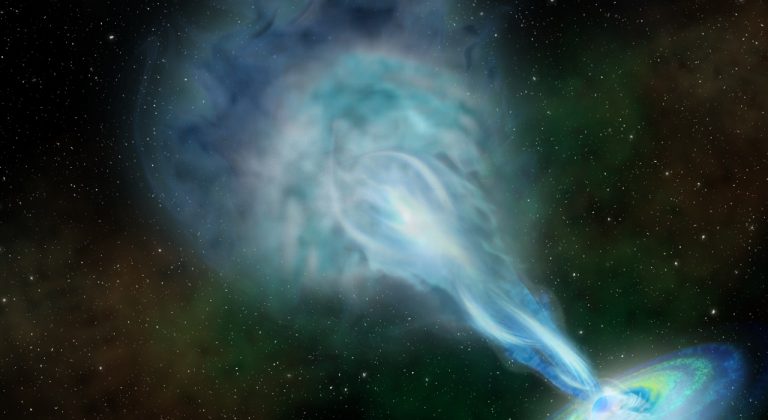
Astronomers using the National Science Foundation’s Very Long Baseline Array (VLBA) have made an image revealing tantalizing details of a quasar nearly 13 billion light-years from Earth — an object that may provide important clues about the physical processes at work in the Universe’s first galaxies. The scientists studied a quasar called PSO...