A new study of infant stars in the Perseus and Orion star-forming regions suggests that most close pairs of stars are born as twins in the same disk, rather than drifting together later from larger distances.
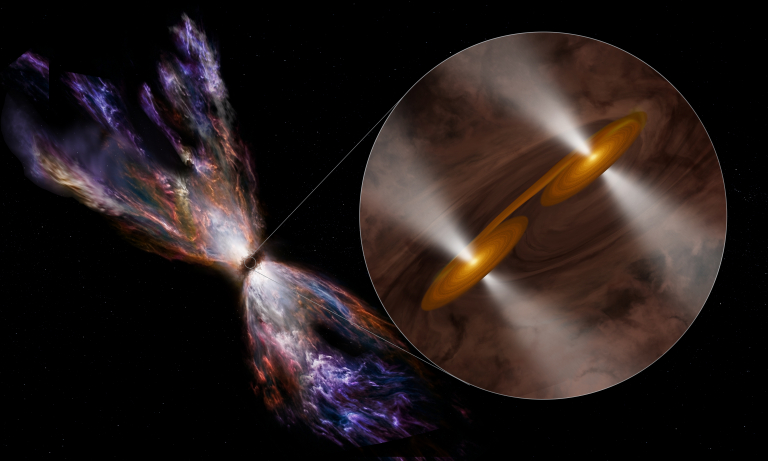

A new study of infant stars in the Perseus and Orion star-forming regions suggests that most close pairs of stars are born as twins in the same disk, rather than drifting together later from larger distances.
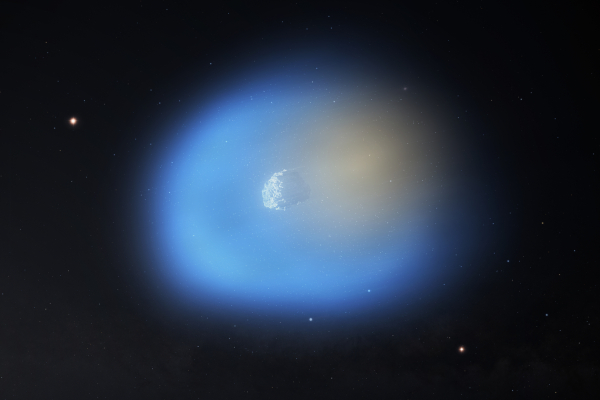
New research reveals that 3I/ATLAS is packed with an unusually large amount of the organic molecule methanol – more than almost all known comets in our own solar system.
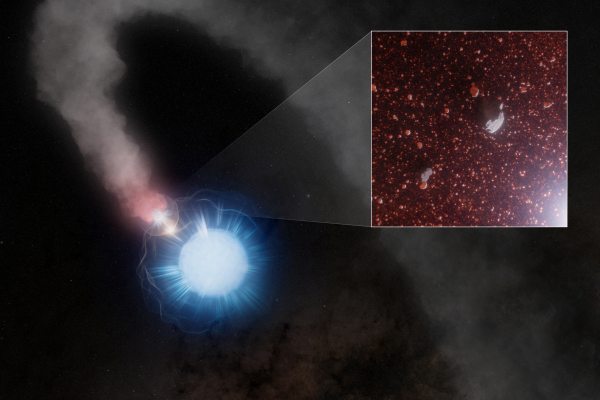
Astronomers using the Atacama Large Millimeter/submillimeter Array (ALMA) and NASA’s James Webb Space Telescope (JWST) have discovered that some of the most massive stars in our galaxy are emitting unbelievably tiny grains of carbon dust—dust that one day could form future stars and planets.
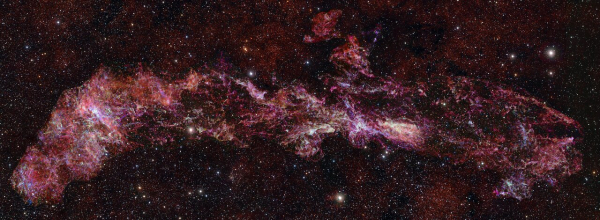
The new survey—known as the ALMA CMZ Exploration Survey (ACES)—maps more than 650 light-years across the Central Molecular Zone, the extreme environment that surrounds our galaxy’s supermassive black hole.