
Astronomers have measured the orbit, masses, and distance of a pair of small, active stars with extraordinary precision, using the U.S. National Science Foundation’s Very Long Baseline Array (NSF VLBA), operated by the U.S. National Science Foundation National Radio Astronomy Observatory (NSF NRAO).
Recent News
What Lurks Within the Shadows of Betelgeuse?
A new study using the U.S. National Science Foundation’s Very Large Array and the Atacama Large Millimeter/submillimeter Array shows compelling new evidence that Betelgeuse’s atmosphere is being actively perturbed by the aforementioned close-in stellar companion.
Cosmic “Hamburger” Has the Secret Ingredients (For Giant Planet Formation, That Is)
Astronomers using the Atacama Large Millimeter/submillimeter Array (ALMA) were surprised to discover the very earliest phases of giant planet formation between the dense layers of gas and dust in the “Gomez’s Hamburger” system, referred to as GoHam.
10 Questions: Melissa Carrillo
An inside look at unique careers in STEM
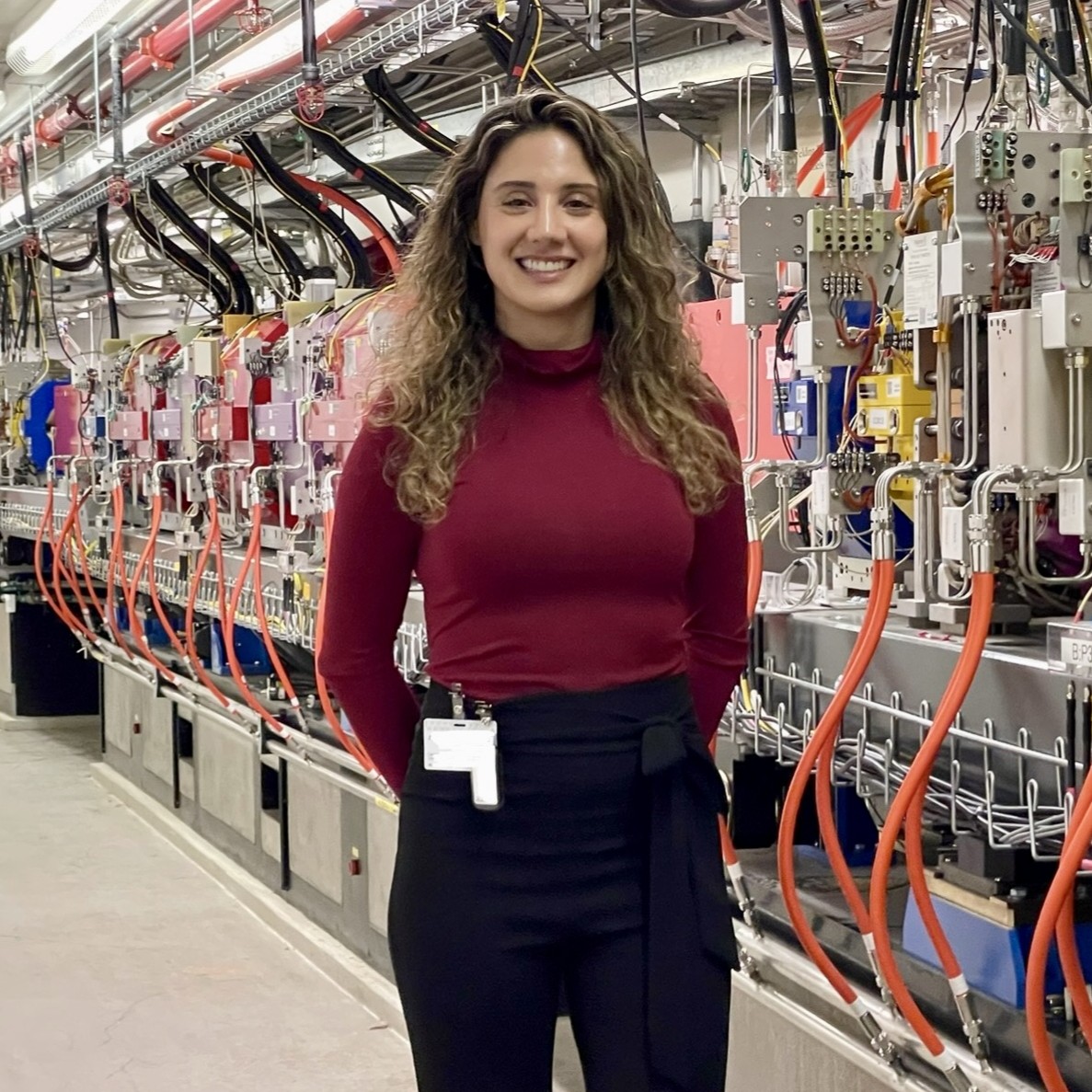
In each installment of our “10 Questions” blog series, readers will meet a staff member from AUI or one of its managed facilities, gaining insight into their career journey, what their role involves and what makes their work meaningful.
1. What is your role and what facility do you work at?
I am a beamline and research scientist at the Industrial Macromolecular Crystallography Association Collaborative Access Team (IMCA-CAT), located at Sector 17-ID of the Advanced Photon Source (APS) at Argonne National Laboratory. Our beamline specializes in macromolecular crystallography, providing pharmaceutical companies with high-quality x-ray diffraction data to support structure-based drug discovery.
My role combines scientific research, physics, macromolecular biology, engineering and beamline operations. I oversee the performance, maintenance, troubleshooting, and continued development of our experimental instrumentation to ensure we deliver reliable, efficient, and high-quality data collection for our members.
2. What drew you to this field and how did you get started?
My background is in biology, and I have always been fascinated by understanding how things work at the molecular level. During my scientific training, I became interested in structural biology and how powerful x-ray techniques can reveal the three-dimensional structures of biological molecules.
That interest eventually led me to pursue a Ph.D. in Switzerland, where I worked at the Paul Scherrer Institute in collaboration with the University of Basel. My research focused on developing sample delivery methods for time-resolved serial crystallography using X-ray free-electron lasers (XFELs), allowing us to investigate structural changes in proteins.
Throughout my Ph.D., I had the opportunity to conduct experiments at major x-ray facilities around the world. These experiences introduced me to the fascinating intersection of biology, physics and engineering, and ultimately inspired me to pursue a career working directly at a synchrotron beamline.
3. Can you describe a typical workday?
One of the things I enjoy most about my job is that no two days are exactly alike. My day might involve monitoring beamline performance, optimizing the x-ray beam, troubleshooting robotic sample handling systems, or working with engineers and vendors to improve our instrumentation.
During experimental operations, my priority is ensuring that our members can collect high-quality data efficiently and reliably. Outside of operations, I focus on testing new equipment, investigating technical issues, analyzing performance data and developing solutions that improve our capabilities.
Working at a synchrotron requires flexibility and quick problem-solving. Sometimes a seemingly small technical issue can become an interesting engineering challenge, and finding a solution is one of the most rewarding parts of the job.
4. What do you enjoy most about your job and why?
I enjoy the combination of scientific discovery, engineering and problem-solving. I like understanding how complex systems work, identifying opportunities for improvement and turning ideas into practical solutions.
What makes my work especially rewarding is knowing that I am contributing to pharmaceutical drug discovery and the development of new medications and potential treatments and cures for diseases. By ensuring that our beamline operates efficiently and produces high-quality data, I help support research that can ultimately improve people’s lives.
I also enjoy the continuous learning. There is always something new to understand, and I have the opportunity to collaborate with scientists, engineers and technical experts from different backgrounds. It’s rewarding to see how our collective efforts, whether through small technical improvements or major developments, contribute to a much larger scientific and medical purpose.
5. What is your favorite part about working at AUI/NRAO/IMCA-CAT?
My favorite part about working at IMCA-CAT is the opportunity to take ownership of technical challenges and contribute directly to the development of the beamline.
I appreciate working in an environment where scientific expertise, engineering and collaboration come together. Our work involves close interactions with scientists, engineers, technical staff and equipment manufacturers, and I enjoy learning from their different areas of expertise.
I also value the opportunity to contribute ideas and help shape how our beamline evolves. Knowing that our work supports pharmaceutical research and ultimately contributes to the development of new medicines gives our efforts a meaningful purpose.
6. What’s something about your job that most people don’t know?
Most people are surprised to learn how much engineering and troubleshooting are involved in being a beamline scientist.
Although our primary goal is to collect x-ray diffraction data from protein crystals, achieving that requires an incredibly complex combination of optics, robotics, cryogenics, vacuum systems, precision motion controls and software.
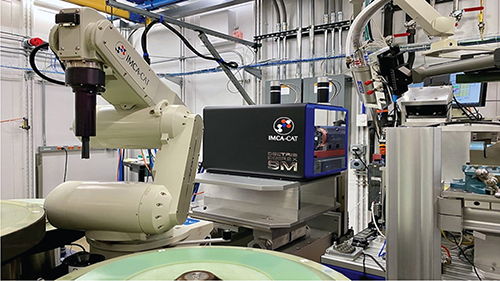
For example, we use a robotic system to handle protein crystals maintained at cryogenic temperatures, exchanging samples in approximately 18 seconds. At the same time, we must maintain a highly focused and stable x-ray beam that can be only a few tens of micrometers wide.
A significant part of my job involves making sure all these systems work together reliably. It’s a fascinating combination of science and engineering that most people never get to see.
7. What’s a project you’ve recently completed, and what impact do you hope it will have?
One of the projects I’ve been most involved in is improving the efficiency, reliability and automation of our beamline’s robotic sample-handling system. I’ve worked closely with our equipment manufacturer, Rigaku, to identify operational challenges, optimize robotic movements and develop engineering solutions that improve system performance.
A major focus has been reducing sample exchange times while maintaining high reliability, allowing us to achieve exchanges in approximately 18 seconds. I’ve also worked on identifying and resolving mechanical issues, improving cryogenic sample-handling components, and developing solutions to minimize interruptions during data collection.
What makes this work particularly rewarding is seeing how these improvements directly impact our scientific capabilities. Our goal is to collect up to 1,000 datasets per day, and achieving that requires a highly efficient and dependable system. By reducing downtime and increasing automation, we can maximize the amount of high-quality structural data collected for our pharmaceutical partners, ultimately accelerating research and drug discovery.
I enjoy projects like this because they allow me to combine scientific knowledge with hands-on engineering and problem-solving, while contributing to improvements that will benefit our facility for years to come.
8. What is the most memorable moment of your career thus far?
One of the most memorable experiences of my career was conducting experiments at all five x-ray free-electron laser facilities around the world during my Ph.D.
These experiments often involved months of preparation, international collaborations and teams of scientists working together around the clock to make the most of limited experimental beamtime.
There is something incredibly exciting about finally seeing experimental data after months of designing, preparing and troubleshooting an experiment. Those experiences taught me the importance of teamwork, perseverance and adaptability.
They also gave me the opportunity to work with talented scientists and engineers from different countries and disciplines, which helped shape both my scientific career and my approach to problem-solving.
9. What’s one thing you’re excited about in the coming year at work?
I’m particularly excited about continuing to develop and improve the capabilities of our beamline, with an emphasis on automation, reliability and experimental efficiency.
As our instrumentation evolves, there are opportunities to introduce better monitoring systems, improve robotic performance, and develop solutions that allow us to identify and resolve problems more proactively.
I’m also looking forward to taking on greater responsibilities, helping guide development projects, mentoring colleagues and contributing to the longer-term direction of our facility.
I find it exciting to be part of a team where the improvements we make today can shape how experiments are performed in the future.
10. What’s the best career advice you’ve ever received?
One of the most valuable lessons I’ve learned is to never stop asking questions and to be willing to step outside my comfort zone.
Throughout my career, some of my greatest opportunities for growth have come from taking on challenges that initially felt unfamiliar. I’ve learned that you don’t need to know everything before taking on a new responsibility, but you do need to be curious, resourceful and willing to learn.
I also believe it’s important to surround yourself with people who have different expertise and to never hesitate to learn from them. Science and engineering are collaborative fields, and being open to different perspectives makes you a better scientist and problem-solver.


Recent News
Astronomers Track a Flaring Dwarf-Star Duo with Exceptional Precision
Astronomers have measured the orbit, masses, and distance of a pair of small, active stars with extraordinary precision, using the U.S. National Science Foundation’s Very Long Baseline Array (NSF VLBA), operated by the U.S. National Science Foundation National Radio Astronomy Observatory (NSF NRAO).
What Lurks Within the Shadows of Betelgeuse?
A new study using the U.S. National Science Foundation’s Very Large Array and the Atacama Large Millimeter/submillimeter Array shows compelling new evidence that Betelgeuse’s atmosphere is being actively perturbed by the aforementioned close-in stellar companion.
Cosmic “Hamburger” Has the Secret Ingredients (For Giant Planet Formation, That Is)
Astronomers using the Atacama Large Millimeter/submillimeter Array (ALMA) were surprised to discover the very earliest phases of giant planet formation between the dense layers of gas and dust in the “Gomez’s Hamburger” system, referred to as GoHam.