
An inside look at unique careers in STEMIn each installment of our “10 Questions” blog series, readers will meet a staff member from AUI or one of its managed facilities, gaining insight into their career journey, what their role involves and what makes their work...
Recent News
Cosmic Cocktail: Exotic Methanol Discovered in Planet-Building Zones
New results from the ALMA COMPASS Large Program (Complex Organic Molecules in Protostars with ALMA Spectral Surveys) show that young, still-forming stars are surrounded by a surprisingly sophisticated “chemical starter kit”, including organic molecules such as methanol that may one day enrich planets.
Proctor Foundation for Art and Science Offers Stellar Guitar to Space Camp Auction
To celebrate the Inspiration4 Mission’s 5th Anniversary, mission pilot Dr. Sian Proctor is choosing to celebrate in a fitting way — raising funds to send community college students and faculty to Space Camp.
10 Questions: Mario Vargas
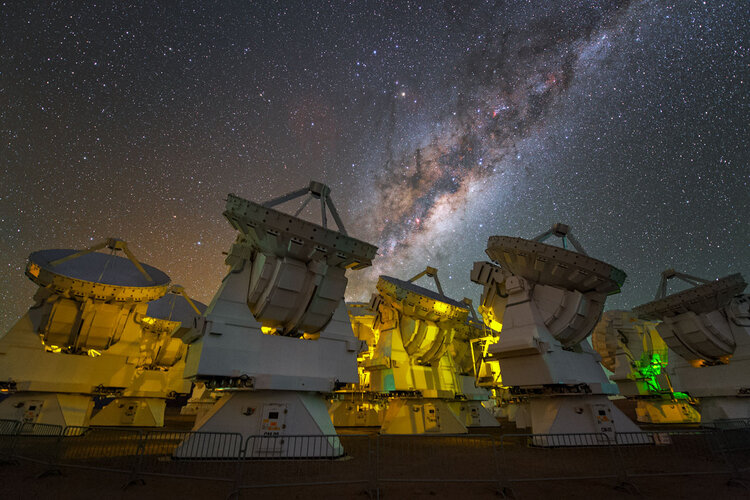
An inside look at unique careers in STEM
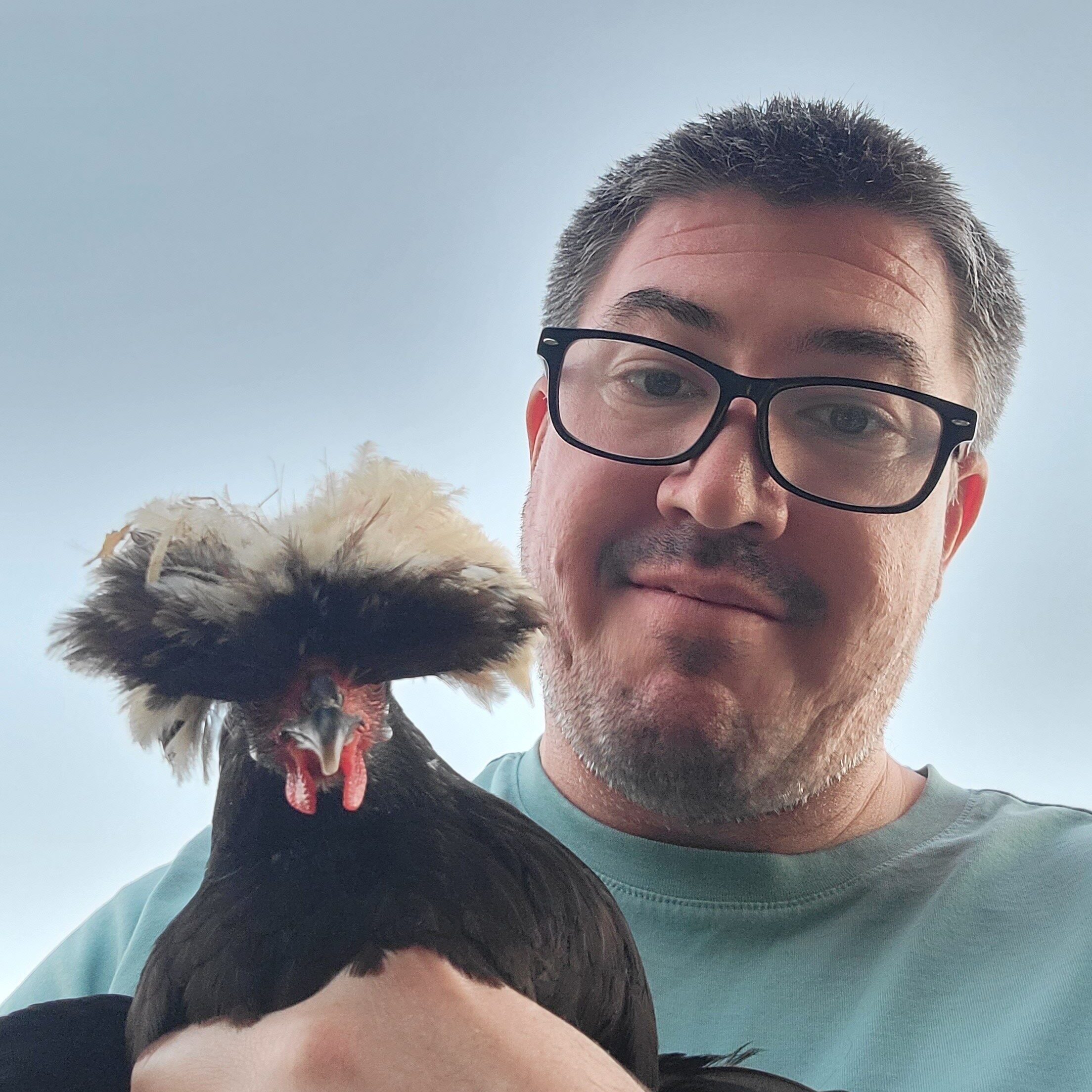
In each installment of our “10 Questions” blog series, readers will meet a staff member from AUI or one of its managed facilities, gaining insight into their career journey, what their role involves and what makes their work meaningful.
1. What is your role and what facility do you work at?
I am a technical specialist III at the U.S. National Science Foundation National Radio Astronomy Observatory’s (NSF NRAO) Central Development Laboratory (CDL). I assemble and test the Band 6 Version 2 (B6V2) receivers for the Atacama Large Millimeter/submillimeter Array (ALMA) telescope, which will allow for wider frequency coverage, increased sensitivity and a larger intermediate frequency band.
2. What drew you to this field and how did you get started?
I started off in the U.S. Navy, where I was an aviation electronics technician with a background in electronics troubleshooting and repair, RADAR, and Micro-Miniature repair (2M). From there, I got into space systems, working for the NASA Sounding Rocket Program in Wallops Island, Virginia. This is where I learned about extremely detailed production efforts to make sure things work in both the vacuum of space and in flight, with extreme heat and cold and violent vibrations. These experiences have been very valuable during my time here at the NRAO.
3. Can you describe a typical workday?
Currently, we are still in the development phase of B6V2, but we are moving ahead. We have a morning meeting to get a good grasp on what the day has planned, and from there, complete tasks ranging from buildup or testing of receiver cartridges to implementing processes that will streamline production efforts when we reach that stage.
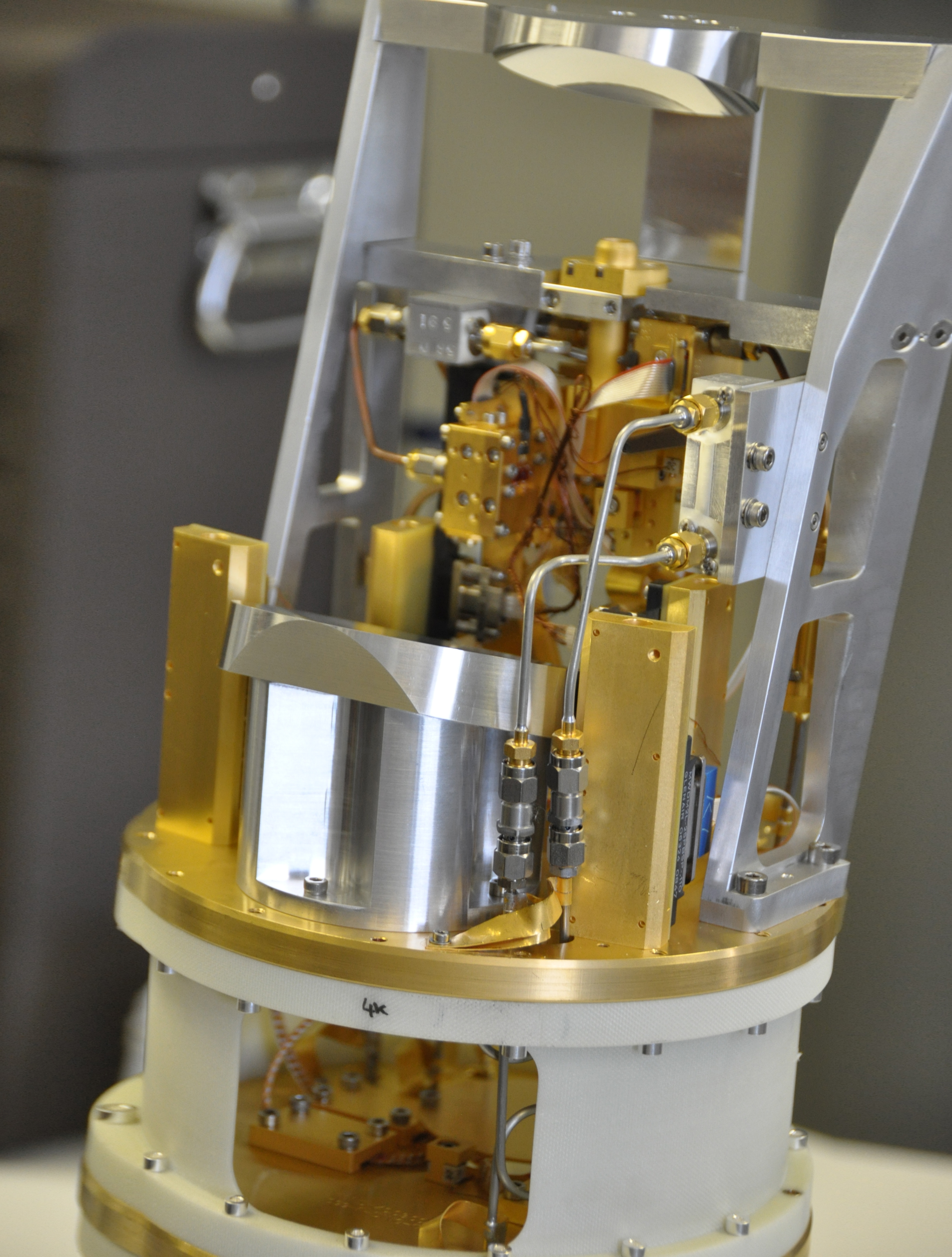
ALMA B6V1 receiver. Image credit: NSF/ AUI/ NSF NRAO
4. What do you enjoy most about your job and why?
I enjoy the dedication from the team. Everyone on my team is extremely passionate and dedicated to providing a high-quality product to ALMA. It is very inspiring to see people who have poured their lives into their research have success. To be a part of that is extremely rewarding.
5. What is your favorite part about working at this facility?
When I applied here, I did a little dive into what the NRAO does. The data collected has been remarkable, and we are learning so much about our universe! It is exciting to know that the work we do here will shape our understanding about the universe, and our children and grandchildren will learn about it in school. It’s very rewarding to be a part of the history of space exploration.
6. What is something about your job that most people do not know?
Just how sensitive the receivers are! They are designed to detect the faintest radio waves from the furthest reaches of the universe. They can “see” through dust clouds, debris fields, etc., and give us increased capabilities compared to other types of telescopes.
7. What’s a recent project you’re excited about, and what impact do you hope it will have?
I am extremely excited about the Next Generation Very Large Array (ngVLA). After seeing the incredible data and images from ALMA and the Very Large Array (VLA), I can’t even imagine what the ngVLA is going to bring us. I am beyond excited!
8. What is the most memorable moment of your career thus far?
I am new to the NRAO, so I’ll go with a previous moment. While working on the NASA Sounding Rocket Operations Contract, there was a team of experimenters who worked extremely hard for over a decade to build an X-ray telescope. When we launched our vehicle into space and our telemetry system started sending data back down, one of the experimenters erupted with excitement! He was yelling in celebration when the data started flowing, “It’s working! I can’t believe it!” We were actually doing live audio callouts back to our home base, and they caught all of his excitement as well. His excitement literally brought me to tears, just knowing how hard they worked and finally reaping the fruits of their labor.
9. What’s one thing you’re excited about in the coming year at work?
We are wrapping up our prototype and pre-production receivers, so the next step is production. This is my first project, so I’m really excited about seeing our work trickle into the ALMA telescope and getting the feedback from the astronomers about their performance. We will be retrofitting dozens of the older receivers as well, so there’s lots of work ahead!
10. What’s the best career advice you’ve ever received?
Negative experiences are only negative if you don’t learn from them. Mistakes happen, and if you learn from them, they can be just as valuable as positive experiences.


Recent News
10 Questions: Desmond Wysenyuy
An inside look at unique careers in STEMIn each installment of our “10 Questions” blog series, readers will meet a staff member from AUI or one of its managed facilities, gaining insight into their career journey, what their role involves and what makes their work...
Cosmic Cocktail: Exotic Methanol Discovered in Planet-Building Zones
New results from the ALMA COMPASS Large Program (Complex Organic Molecules in Protostars with ALMA Spectral Surveys) show that young, still-forming stars are surrounded by a surprisingly sophisticated “chemical starter kit”, including organic molecules such as methanol that may one day enrich planets.
Proctor Foundation for Art and Science Offers Stellar Guitar to Space Camp Auction
To celebrate the Inspiration4 Mission’s 5th Anniversary, mission pilot Dr. Sian Proctor is choosing to celebrate in a fitting way — raising funds to send community college students and faculty to Space Camp.